
Fair Trade Clothing More Expensive?
Why Fair Trade Clothing is more expensive?Let’s to be honest: Diving into the world of sustainable or ethical fashion can feel like a bit of a “sticker shock.” when You’re browsing some ethical clothing sites, looking for a simple organic cotton hoodie, and you see a price tag of $95. Meanwhile, a fast-fashion giant is pushing a similar-looking item for $19.99.As It’s easy to feel like “ethical” is just like a synonym for “luxury,” but in real it couldnot be further like luxury. In reality, that $19.99 hoodie is only cheap because someone, somewhere, is paying the difference with their quality of life.
why Fair Trade Clothing is More Expensive? The 2026 Price Breakdown
In this guide, I am pulling back the curtain on the true cost of fashion and discuss some reasons why Fair Trade Clothing is more Expensive ?. By the end, you’ll see that fair trade isn’t “expensive”—it’s simply the honest price of doing business without exploitation or violation.
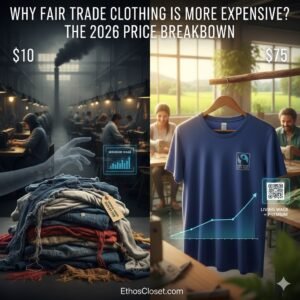
The Living Wage vs. The “Poverty Premium”The only biggest factor in the price of your clothing is the person who made or sewed it. In the traditional or conventional Textile or garment industry, labor is treated as a cost to be minimized at all costs i.e.The Reality of Minimum Wage Most fast-fashion hubs operate on “Legal Minimum Wages.” However, in countries like Pakistan, Bangladesh, Cambodia, or Ethiopia, the legal minimum wage is often only 25% to 40% of what a person actually needs to survive (the “Living Wage”). This gap creates or gives a cycle of poverty that traps generations to generations. But here in The Fair Trade Labor Investment When a brand commits to Fair Trade, they aren’t just following local laws; they are adhering to international standards of dignity. This includes the following:
The Living Wage Guarantee: Ensuring workers can afford nutritious food, clean water, housing, and education for their children.
The Fair Trade Premium: An extra sum of money that goes into a communal fund for workers. They vote on how to spend it—whether that’s building a local school, a healthcare clinic, or a clean water well.
Safe Working Conditions: Fire exits, structural integrity of buildings, and ventilation aren’t “extras”—they are human rights that require financial investment. When you pay more for a garment for sustainable fashion, you are essentially “pre-paying” for the safety and health of the person who sewed your seams.
Material Integrity: Beyond the “Toxic” Discount If labor is the soul of the garment, the fabric is its body. Most cheap clothing is made from virgin polyester (essentially plastic made from crude oil) or conventional cotton (the “dirtiest” crop in the world).The Hidden Costs of Cheap Fabric Conventional cotton uses 16% of the world’s insecticides. This poisons the groundwater and the farmers. Fast fashion brands offer a “discount” because they even don’t have to pay to clean up the rivers they pollute .The Fair Trade Material Standard Sustainable fashion uses materials that are more expensive to grow but cheaper for the planet: GOTS-Certified Organic Cotton: Requires more manual labor and crop rotation, which increases the price but saves thousands of gallons of water. As another Regenerative Fibers: Fibers like Tencel™ or hemp require specialized processing facilities that prioritize closed-loop chemical systems.
Traceability Tech: In 2026, we use Digital Product Passports. Every yard of fabric is tracked via blockchain. This administrative “overhead” ensures that the “organic” label isn’t just a marketing lie.Choosing high-quality, non-toxic materials means the garment lasts five years instead of five washes. This leads us to the most important financial concept in fashion: Cost Per Wear.3. The Math of Longevity: Why “Expensive” is Actually CheaperWe need to change how we look at our bank statements. Instead of looking at the Initial Outlay, we should be looking at the Cost Per Wear (CPW).A 2026 Price Breakdown TableLet’s look at the math for a standard pair of trousers:FeatureFast Fashion TrousersEthos Closet Fair Trade TrousersRetail Price$30$120Expected Lifespan10 Washes (1 Season)100+ Washes (5+ Years)Cost Per Wear$3.00$1.20Environmental ImpactHigh (Microplastics/Landfill)Low (Biodegradable/Recyclable)Resale Value$0 (Non-resellable)$40 (High resale demand)The “Slow Fashion” Production ModelFair trade brands don’t chase trends. We produce in small batches.Fast Fashion: Produces 50,000 units. If they don’t sell, they burn them. They can afford the waste because the units are so cheap.Ethos Closet: We produce 500 units. We pay more per unit because we don’t have the same “bulk discount,” but we ensure zero waste.When you buy fair trade, you are paying for a production model that respects the limits of our planet. You are buying a piece that will still be in your wardrobe in 2030, which—as the table shows—actually saves you money in the long run.