
The Understanding of Technology Regulation in Fashion Sustainability
Technology regulation in fashion sustainability designs to interconnected or interlinked systems where policies, technological tools, and industry practices gives converge to minimize or reduce fashion’s ecological footprint. The fashion or textile sector are responsible for 10% of global carbon emissions, faces mandates like the EU’s Corporate Sustainability Reporting Directive (CSRD) demanding detailed ESG disclosures. These ecosystems foster compliance by blockchain for supply chain tracking and AI for impact assessment, creating a balanced regulatory environment.
Important elements in understanding technology regulation in fashion sustainability includes digital product passports (DPPs) under the Eco friendly design for Sustainable Products Regulation (ESPR), which can track product lifecycles or lifespans from designing to recycling. By 2026, the goal of ESPR expansions target textile industries to emphasize durability and recyclability at the design stage, where 80% of environmental impact occurs.
In this blog ,I am going to discuss understanding Technology regulation in fashion sustainability in depth.I hope you feel interesting in reading this blog.
KEY GUIDELINES TO HELP IN UNDERSTANDING TECHNOLOGY REGULATION IN FASHION SUSTAINABILITY.
Regulatorty Guidelines is just like the backbone of understanding technology regulation in fashion sustainability. The CSRD, effective since 2023, which requires large firms to analyse and report CO2 emissions, material use, and labor conditions across supply chains. Meanwhile, the EU Strategy for Sustainable and Circular Textiles pushes to minimize waste via extended producer responsibility (EPR).
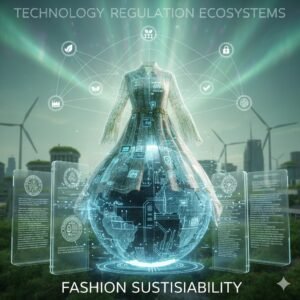
Understanding technology regulation ecosytem in fashion sustainability I give an example of Asia,In Asia, environmental taxes implification motivates or forces textile industries to adopt green tech , For example in China’s textile sector-Certains or harsh specific policies minimize pollutants. Now Approx all over the world,the labeling laws are not only enhance the transparency but also empowering consumers with data on origins and impacts via QR codes that are interlinked to blockchain. These certain rules are not only enforce accountability but also foster innovations in bio-materials and AI-driven forecasting.
CONCLUSION OF TECHNOLOGY REGULATION IN FASHION SUSTAINABILITY
To sum up,I must say in this era,Artificial Intelligence optimizes designs to minimize carbon footprints, usage of non toxic materials,biodegradable fabrics,however,blockchain ensures verify traceability from farm to fashion.Fashion Tech Tools like 3D printing and bio-fabrication that minimizes or eradicates carbon waste-Special platforms like CSRD optimizes compliance,analyse data .These some above innovations gives stronger sustainable fashion ecosystems.Technological Revolutions or innovations gives textile industries to ensures Eco-friendly or Sustainable textiles or garments.
Inspite of progress,the understanding of Technology regulations in fashion faced many hurdles for example weak global policies.As a Pakistani fashion Designer,I must say in Pakistan’s Textile sector however a lot of laws has been established but there is weaken implementation.small brands are struggling with compliance.
FREQUENT ASKED QUESTIONS RELATED TO TECHNOLOGY REGULATION IN FASHION SUSTAINABILITY
1.Why Regulate Technology in Fashion Ecosystems?
Policies gives guidance to technologies for example AI and blockchain towards ethical use, addressing data privacy and greenwashing while promoting sustainable materials and supply chain tracking. Unregulated technological risks amplifying fast fashion waste; regulations foster innovation within boundaries.
2.How Do Digital Product Passports (DPPs) Work?
Digital product passports gives QR-linked digital records, recyclability, and lifecycle impacts via blockchain or NFC tech. They increase traceability in ecosystems sustainability, enable consumers and regulators to verify claims on recycled content and longitivity.
3.What is the EU’s CSRD and Its Impact?
The Corporate Sustainability Reporting Directive (CSRD) ensures big fashion firms to give ESG data.It demands verified reporting on material use and labor, using tech like AI for data aggregation to ensure compliance and combat greenwashing.
4.What Does ESPR Mean for Fashion?
The Ecodesign for Sustainable Products Regulation (ESPR) ensures necessory standards for appreal durability, reparability, and recyclability, banning unsold stock destruction. It integrates tech ecosystems for compliance, pushing circular models that minimize recycled content thresholds.
5.What Are Green Claims Directive Rules?
The Green claim directive ensures third-party verification for environmental claims to prevent misleading marketing, Fashion brands claims with PEF methodologies and CSRD data for credible sustainability narratives.